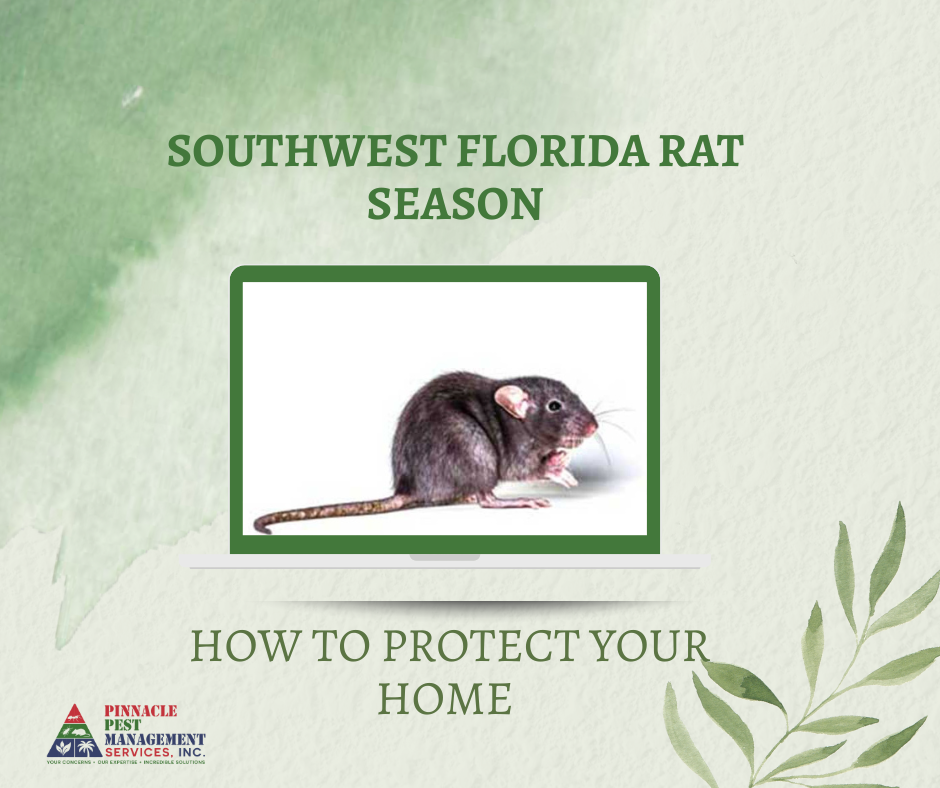
If you’re hearing scratching in the attic or noticing mysterious droppings around your home this time of year, you’re not imagining things, rat activity in Southwest Florida spikes seasonally, and understanding why can help you stay one step ahead.
Unlike many northern states, our warm, subtropical climate doesn’t give rodents a true “off season.” Instead, Southwest Florida becomes a year-round paradise for rats… and a challenge for homeowners who don’t want unwelcome guests.
Let’s break down what’s happening, what to watch for, and how to protect your home.
Why Rat Activity Increases This Time of Year
1. Cooler Evenings Drive Rats Indoors
As temperatures drop even slightly — from humid 90s to breezy 70s — rats start seeking warmer, sheltered nesting spots. Attics, garages, and wall voids become prime real estate.
2. Seasonal Landscaping Provides Perfect Cover
Fall and early winter are popular seasons for mulching, planting, and trimming in SWFL. Fresh mulch, thick hedges, fruit trees, and dense tropical plants offer shaded runways rats use to access your home without being seen.
3. Storm Season Disrupts Natural Habitats
Hurricane season and heavy rain can flood burrows or knock down food sources, pushing rats to relocate — often into the nearest dry, stable structure (yes… your home).
4. More Food Sources Become Available
Thanks to holiday gatherings, outdoor cooking, and increased trash volume this time of year, rats have access to more discarded food. A single open trash can or bird feeder can support an entire rat colony.
The Two Rats Most Common in Southwest Florida
Roof Rats (aka Citrus Rats)
Excellent climbers
Love attics, soffits, and rooflines
Attracted to fruit trees, bird feeders, and palm trees
Sleek bodies with longer tails
Norway Rats
Ground dwellers
Burrow under homes, sheds, slabs, and AC pads
Larger and stockier
Often follow heavy rain or flooding
Knowing the difference helps determine the right treatment and exclusion strategy.
Signs You May Have a Rat Problem
- Scratching or scampering noises at night
- Droppings in attic, garage, or pantry
- Chewed wires, insulation, or stored boxes
- Greasy rub marks along walls
- Torn or shredded materials (nesting)
- A musky, ammonia-like odor
If you hear noises in the attic at night, it’s almost always roof rats in Southwest Florida.
Why DIY Rat Control Doesn’t Work in SWFL
Rats in our region are clever, adaptable, and extremely cautious. Common DIY issues include:
- Placing traps in the wrong locations
- Missing entry points, allowing new rats to replace trapped ones
- Using food baits that attract other wildlife
- Accidentally creating secondary infestations (in walls, soffits, or ductwork)
Best practice requires locating entry points, eliminating attractants, setting targeted traps, and sealing openings permanently.
How to Protect Your Home This Season
✔ Seal All Gaps & Openings
Rats can squeeze through holes the size of a quarter. Damaged soffits, attic vents, roof intersections, and gaps around plumbing lines are the most common entry points in SWFL.
✔ Trim Vegetation Away From the Home
Keep branches off the roofline and avoid dense landscaping touching exterior walls.
✔ Secure Garbage & Food Sources
Use tight-fitting lids, bring pet food indoors, and limit fruit left on the ground from citrus or mango trees.
✔ Schedule a Professional Inspection
A trained technician can identify weak spots, droppings, rub marks, and hidden access points you might never notice.
Why Professional Rodent Exclusion Is Essential in Southwest Florida
Rats multiply quickly — a single pair can produce up to 1,200 offspring in a year under ideal conditions.
And in SWFL, conditions are always ideal.
A complete rodent service should include:
- A thorough attic and exterior inspection
- Identification of species
- Targeted trapping
- Full home exclusion (sealing entry points)
- Ongoing monitoring, if needed
This is the only proven long-term solution for our region’s climate and building styles.
Final Word: Don’t Wait Until It’s a Full Infestation
Rats rarely travel alone. If you’re seeing one, hearing one, or finding one dropping… there are more.
Now is the perfect time of year to protect your home before activity peaks. We’re here to help Southwest Florida homeowners stay rodent-free with safe, effective, long-lasting solutions.
Want a free inspection or expert advice?
Contact us today! (239) 225-0615
Your home will thank you.